
Level 1 · Lesson 5 · ~15 min
The trading day: Asia, Europe and US sessions
NQ trades nearly around the clock, but the hours don't all feel the same. A quiet evening and a busy morning can be different worlds, and knowing which one is on the screen changes how a chart reads.
Nearly 23 hours a day
NQ trades on the CME's electronic market from Sunday 5 PM to Friday 4 PM, US Central time (CT, Chicago's clock). Each weekday it pauses for one hour, from 4 PM to 5 PM CT. That pause is the daily break. When it ends at 5 PM, the next trading day begins.
That's why a trading day in futures starts the evening before. Monday's trading day opens on Sunday at 5 PM.
The classroom splits each trading day into three sessions, each named after the part of the world that is awake and busy at the time:
- Asia: 5 PM to 2 AM CT.
- Europe: 2 AM to 8:30 AM CT.
- US: 8:30 AM to 3 PM CT.
From 3 PM to 5 PM nothing posts. The US session is over, and the daily break follows at 4.
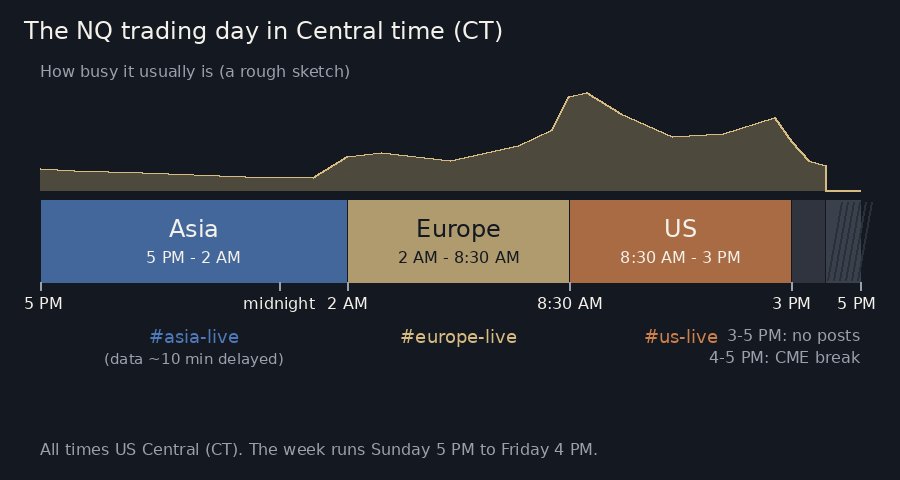
Three sessions, three moods
Think of a city through the day. Late at night a few cars move; at rush hour the roads fill up. The market has its own rush hours.
Asia is usually the quietest. Fewer traders are active, so fewer orders are waiting at each price. Traders call that a thin market. Moves tend to be smaller and slower, but a single large order can push price further than it would at a busier time.
Europe wakes things up. The London stock market opens at about 2 AM CT, more traders arrive, and NQ often starts to move with more purpose.
US is the busiest. At 8:30 AM CT the US stock market opens for its regular day, which traders call the cash open. It brings the most volume, meaning the most contracts changing hands. The biggest moves, the fastest candles and the day's real tests of the zones usually happen here.
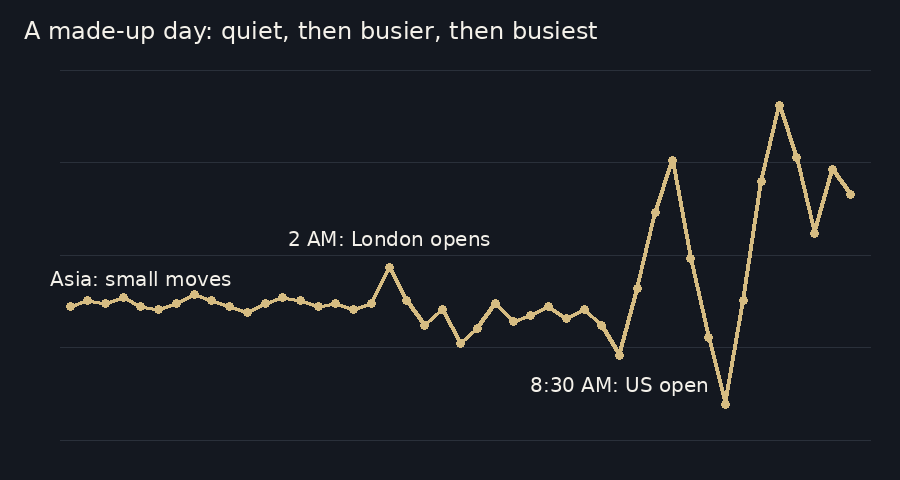
None of this is a rule. A news headline can wake up Asia, and some US afternoons are sleepy. It's a tendency, and a useful one to keep in mind when reading a chart.
A room for each session
The classroom has a live room for each session: #asia-live, #europe-live and #us-live. Study moments, heads-ups and plan updates land in the room for the session they happened in. Each session also gets its own lesson plan before it starts and a reflection after it ends.
One difference is worth knowing. Free price data overnight arrives about 10 minutes late. So posts in Asia, and in the first hour of Europe, carry a label saying they were posted after the fact.
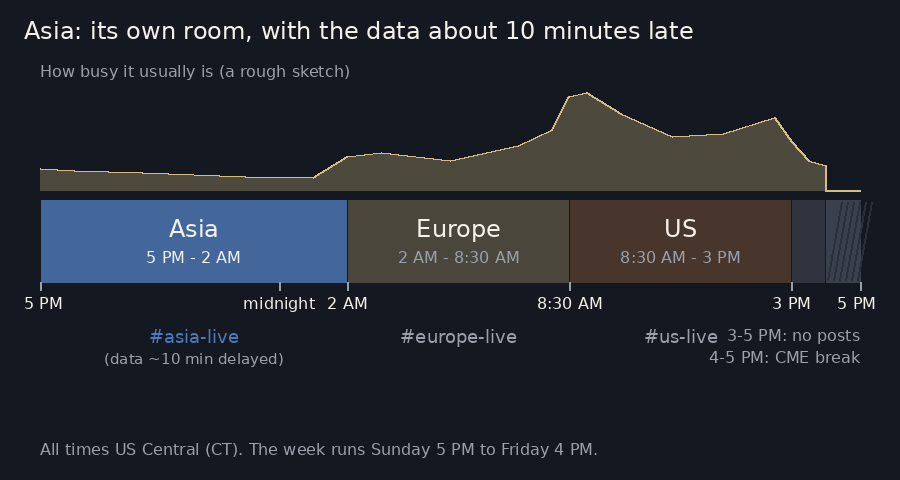
In our posts: "📡 Posted ~10 min after the fact (overnight data is delayed). For study, not live."
That line means the post describes something from about 10 minutes earlier. It's a lesson about what already happened, and scrolling the chart back 10 minutes shows the moment it talks about.
Your day follows the session you can watch
Nobody watches all 23 hours, and nobody has to. Most traders pick the one session that fits their life and get to know it well.
Someone working days in Chicago might study the evening Asia session after dinner. Someone in London sees Europe over breakfast. Someone free in the mornings in the US can watch the 8:30 open.
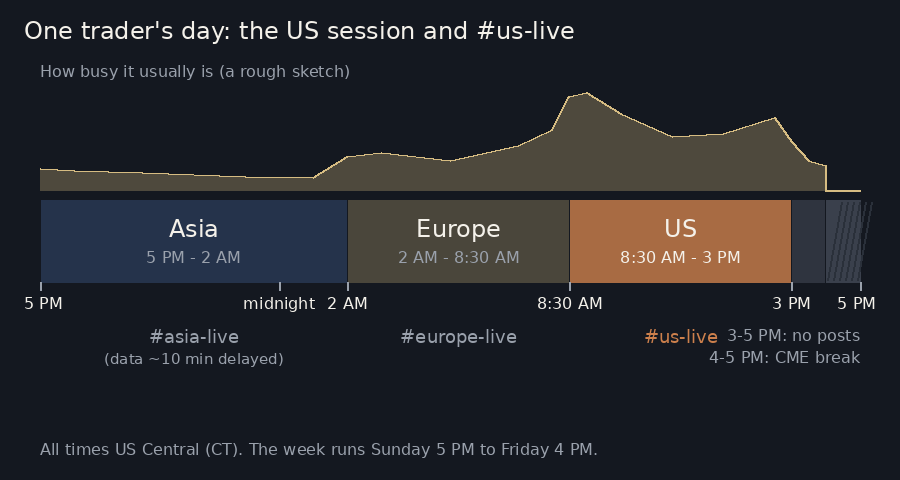
A seasoned trader builds a routine around that one session. They read its lesson plan before it starts, follow its room while it runs, and read the reflection afterwards. Same hours, same room, day after day. That's how the feel of a session becomes familiar.
Recap
- NQ trades Sunday 5 PM to Friday 4 PM CT, with a 4 to 5 PM break each weekday; a new trading day starts at 5 PM.
- Asia (5 PM to 2 AM) is usually thinner and slower, Europe (from 2 AM) picks up with London, and the US (from 8:30 AM) has the most volume.
- Each session has its own room; Asia posts are labelled as about 10 minutes delayed, for study.